- Know the difference between reporting and feedback
Understand why dashboards tell you what happened, while a true feedback loop changes what happens next. - Separate meaningful intent from activity noise
Learn how frequency, recency, and depth help distinguish real buying signals from isolated engagement. - Measure the cost of slow-moving insight
Identify how long it takes objections, call insights, and campaign learnings to actually influence the next sequence or audience. - Find where your feedback loop breaks
See how insight gets lost between SDRs, marketing, and leadership as it crosses ownership boundaries. - Use objections to improve your ICP
Learn when repeated objections indicate a targeting problem rather than another messaging problem. - Know when to rewrite — and when to retire
Use performance variance to distinguish a message worth optimizing from one built on the wrong premise. - Build a loop that runs without manual effort
Move from meetings, memory, and manual notes to a system where signals are automatically surfaced, routed, and acted on.
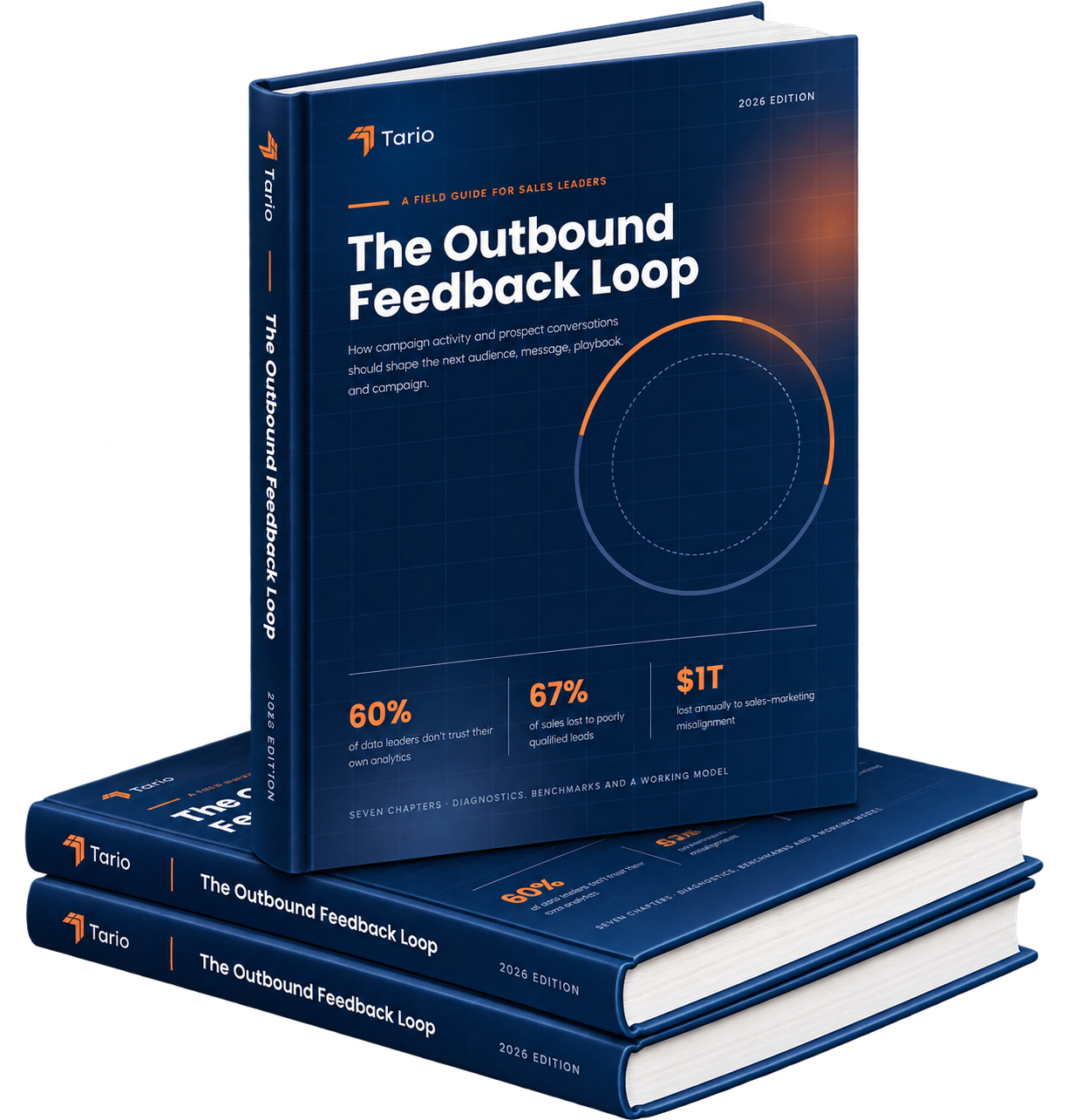
I’d use “Turn every campaign, conversation, and buyer signal into a smarter next move” as the main landing-page subheading because it captures the entire Audience → Message → Conversation → Playbook loop shown in the ebook.